Marine Life
Sharks
Sharks of the Red Sea
Sharks are among the most ancient, most misunderstood, and most thrilling animals a diver can encounter in the wild. The Red Sea is one of the world’s great shark-diving destinations, and Marsa Alam is one of the best places in Egypt to experience it.
An Ancient Lineage
Sharks represent one of the oldest surviving vertebrate lineages on Earth. The earliest shark-like chondrichthyan fossils date back more than 400 million years — long before the first dinosaurs, long before the first mammals, and hundreds of millions of years before the Red Sea itself existed as a body of water. Sharks have not remained unchanged: they have evolved substantially over geological time, branching into hundreds of species with radically different body shapes, diets and habitats. But the broader lineage is extraordinarily ancient. When you encounter a shark on a Red Sea reef, you are looking at an animal whose evolutionary history predates the sea it swims in by an almost unimaginable span of time.
What is a Shark?
Sharks are cartilaginous fishes: their skeleton is made primarily of cartilage rather than bone. They belong to the class Chondrichthyes, which also includes rays and skates. Sharks breathe through gills, typically with five to seven gill slits on the sides of the head. Most species have multiple rows of replaceable teeth — when a tooth is lost or worn, another moves forward to take its place. Body shapes vary enormously across species, from the sleek pelagic forms of oceanic whitetips to the broad, flattened heads of hammerheads. Not all sharks are large predators: the smallest shark species fits in the palm of a hand, while the largest — the whale shark — is the biggest fish in the ocean and feeds on plankton.
Built to Hunt
Sharks are built for efficiency in the water. Most species have streamlined bodies and powerful tails that drive them forward with minimal effort. Their pectoral fins provide lift and stability, while the dorsal fin helps prevent rolling. The skin is covered with dermal denticles — tiny, tooth-like structures that reduce drag and give shark skin its rough texture. The cartilage skeleton is lighter than bone, which helps with buoyancy and flexibility. Many species have replaceable teeth adapted to their diet: sharp, serrated teeth for tearing in predatory species, flat, pavement-like teeth for crushing shells in bottom-dwelling species. These adaptations have been refined over hundreds of millions of years of evolution.
The Senses of a Shark
Sharks possess one of the most sophisticated sensory arrays in the animal kingdom. Their sense of smell is highly developed — chemical detection allows them to detect prey, mates and food sources across significant distances in the water column. Vision varies by species but many sharks see well in low light. They can detect low-frequency sounds and vibrations through hearing and the mechanosensory lateral line, which runs along the body and picks up movement in the surrounding water. Perhaps the most remarkable sense is electroreception: the ampullae of Lorenzini, small gel-filled pores on the snout, allow sharks to detect the faint electrical fields produced by the muscles of other animals. This is why sharks can locate prey hidden under sand or in dark water. Together, these senses make sharks extraordinarily effective at navigating and hunting in the underwater world.
Why Sharks Matter
Sharks play a vital role in marine ecosystems. As predators, many shark species help regulate prey populations, which in turn affects the balance of the entire food web. By removing weaker or sick individuals, sharks can contribute to the health of prey populations. Some species, like reef sharks, help maintain the balance between competing species on the reef. Others, like oceanic whitetips, are part of the open-ocean predator community that shapes pelagic ecosystems. Not every shark species is a top predator — some are mid-level predators, others are filter feeders — but each plays a role in the ecosystem it belongs to. Healthy shark populations are generally a sign of a healthy marine ecosystem, and the decline of shark populations can have cascading effects throughout the food web.
Sharks of the Red Sea
The Red Sea supports a diverse assemblage of shark species. Scientific datasets document species including the oceanic whitetip shark (Carcharhinus longimanus), scalloped hammerhead (Sphyrna lewini), great hammerhead (Sphyrna mokarran), whitetip reef shark (Triaenodon obesus), grey reef shark (Carcharhinus amblyrhynchos), silvertip shark (Carcharhinus albimarginatus), blacktip reef shark (Carcharhinus melanopterus), tiger shark (Galeocerdo cuvier) and whale shark (Rhincodon typus), among others. Not all of these are commonly encountered by divers. Some are pelagic species associated with open water and offshore reefs; others are reef-associated species that may be seen near the bottom or resting in caves. The diversity of the Red Sea’s shark fauna is one of the reasons the region is so highly valued by divers.
Sharks Around Marsa Alam
Marsa Alam is one of Egypt’s major destinations for shark encounters. The offshore pinnacles and walls of the Marsa Alam coast are the key: sites like Elphinstone Reef rise from deep water into the open blue, creating the kind of environment where pelagic sharks gather. Oceanic whitetip sharks are the signature species — curious, approachable and one of the most iconic shark encounters a diver can have anywhere in the world. Hammerheads are seasonally observed, often in open water off the walls. Whitetip reef sharks may be encountered on reef-associated sites. The combination of deep-water access, strong currents and offshore reef structure makes Marsa Alam a genuinely world-class shark-diving destination.
Meet the Species
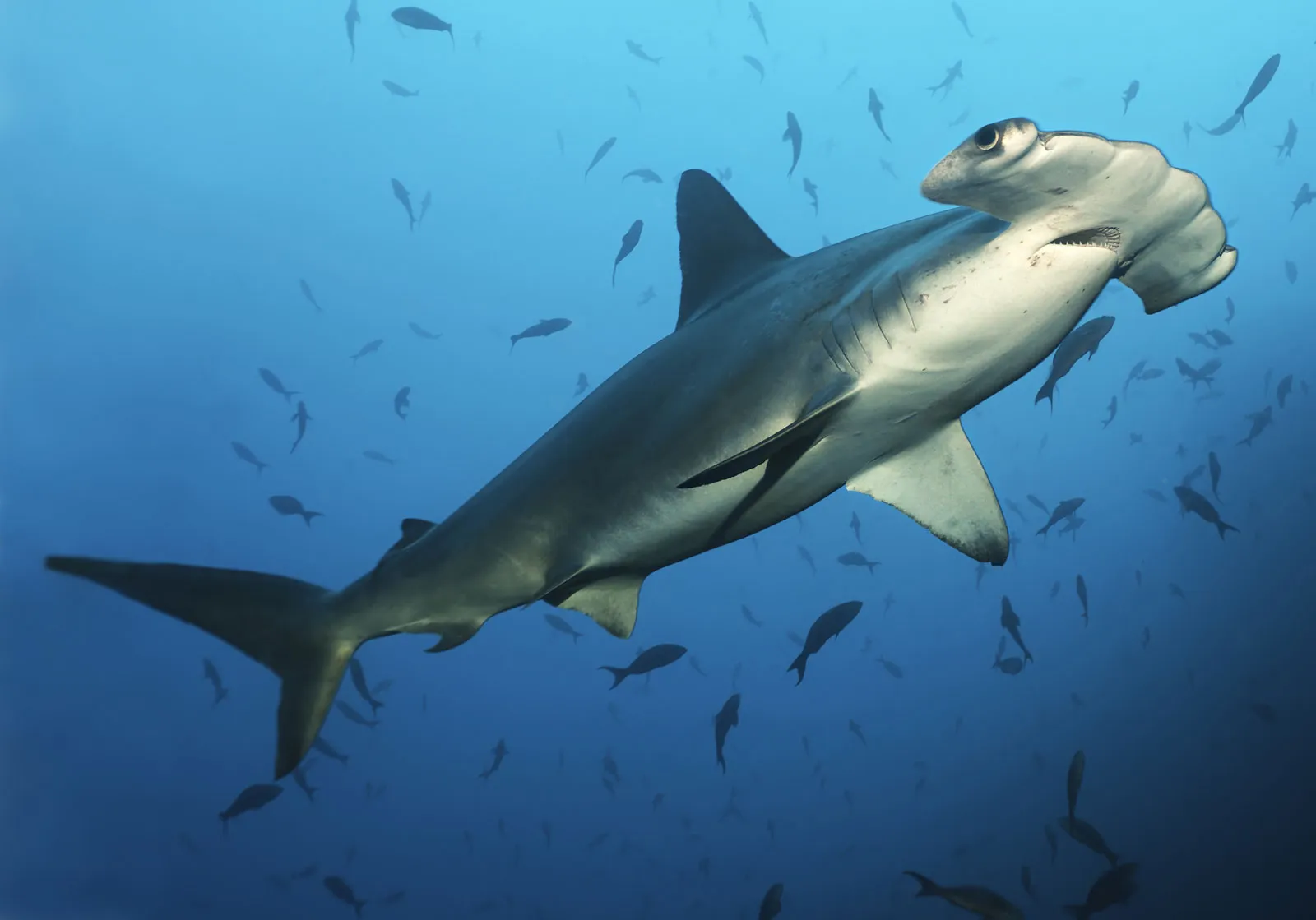
Hammerhead Sharks
Scalloped hammerheads seen at Elphinstone and the Deep South, especially in summer months.
Explore Species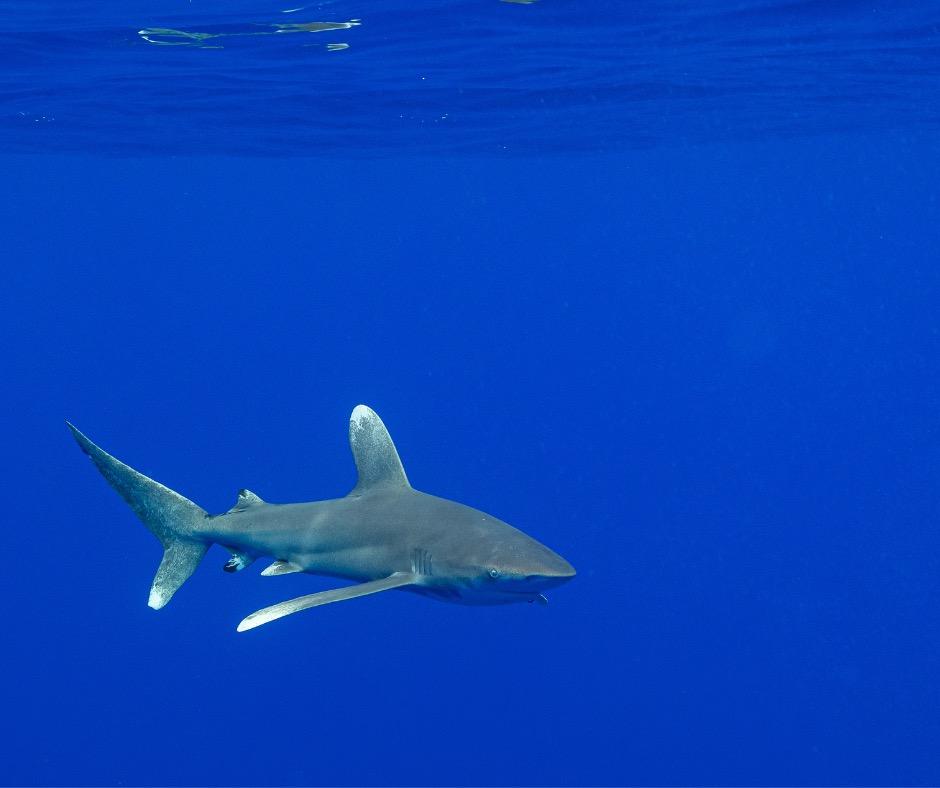
Oceanic Whitetip Shark
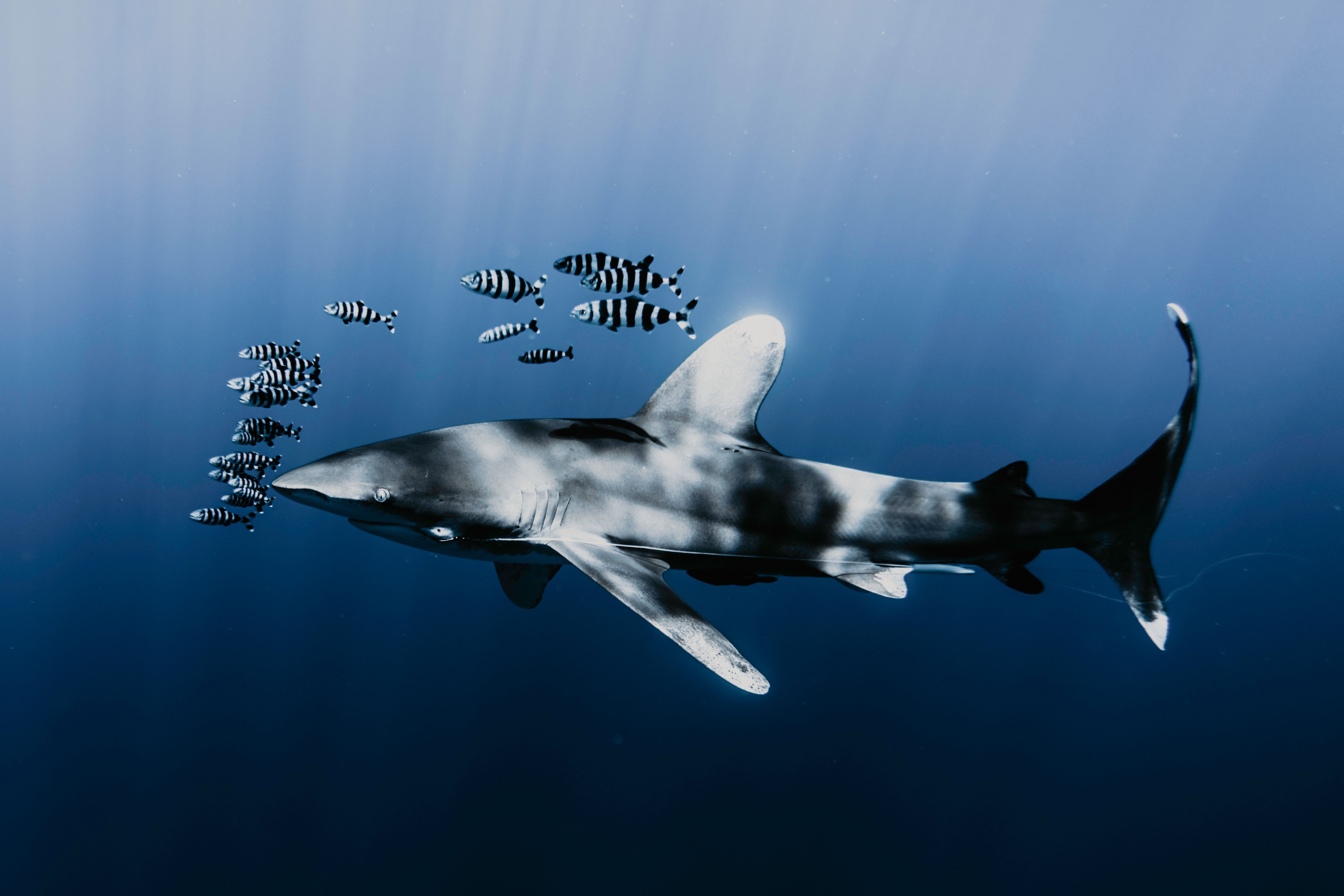
The Oceanic Whitetip Shark is one of the Red Sea’s most iconic pelagic species, and Elphinstone Reef is internationally recognised as an Important Shark and Ray Area for this species. Marsa Alam is one of the world’s outstanding places to encounter wild Longimanus.
Explore Species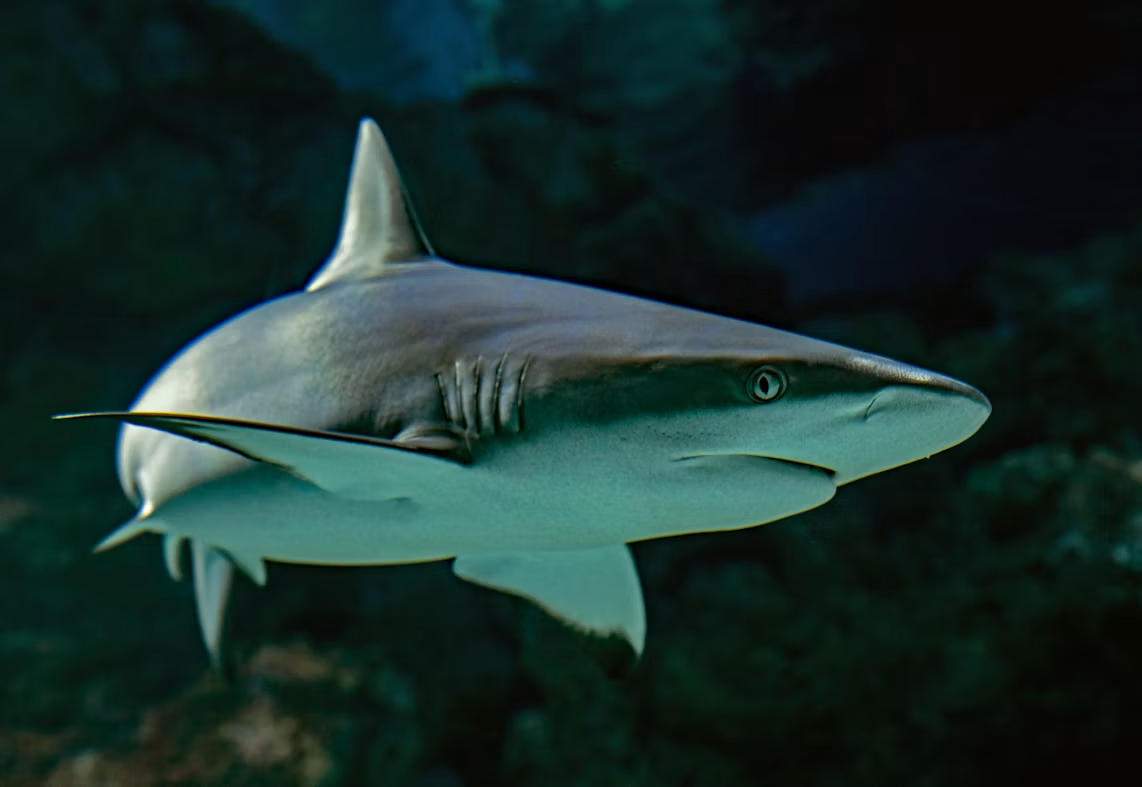
Grey Reef Shark
Grey reef sharks are powerful, streamlined reef sharks commonly associated with exposed reef edges, drop-offs and offshore reefs. At Marsa Alam, Elphinstone Reef is the principal site to look for them.
Explore SpeciesWhere to Dive with Sharks in Marsa Alam
When to Dive for Sharks
There is no single “shark season” in Marsa Alam — different species have different patterns. Some shark encounters are strongly associated with particular seasons and sites, while resident reef sharks may be encountered year-round where the habitat supports them. Oceanic whitetip sharks are often associated with particular periods at sites like Elphinstone, while hammerheads have their own seasonal patterns that may differ. Whitetip reef sharks are generally associated with reef habitats and may be encountered throughout the year. Rather than looking for a single peak month, divers should understand which species are most likely at which sites and in which conditions, and plan accordingly.
Responsible Shark Diving
Responsible shark diving is about observing natural behaviour, not provoking interaction. Never touch, feed or bait sharks. Never chase or corner a shark. Maintain calm, controlled movement throughout the dive — sudden movements and rapid swimming can startle sharks and alter their behaviour. Stay with your buddy and follow your guide’s instructions at all times. Maintain appropriate buoyancy and do not interfere with the shark’s natural behaviour. If a shark approaches, stay calm and let it pass — most close approaches are curiosity, not aggression. The goal is to be a respectful observer in the shark’s environment, not an intruder disrupting it.
Sharks & Divers
Diving with sharks is one of the most powerful experiences the underwater world offers. It is not about adrenaline and danger — it is about witnessing ancient, wild animals in their own environment, on their own terms. A shark encounter at Elphinstone, watching an oceanic whitetip glide through the blue, or seeing hammerheads pass in open water, are moments that stay with divers for a lifetime. Responsible shark diving is adventurous, professional and deeply respectful. The sharks of the Red Sea are part of what makes this sea one of the world’s great diving destinations, and Marsa Alam is one of the best places to experience it.